
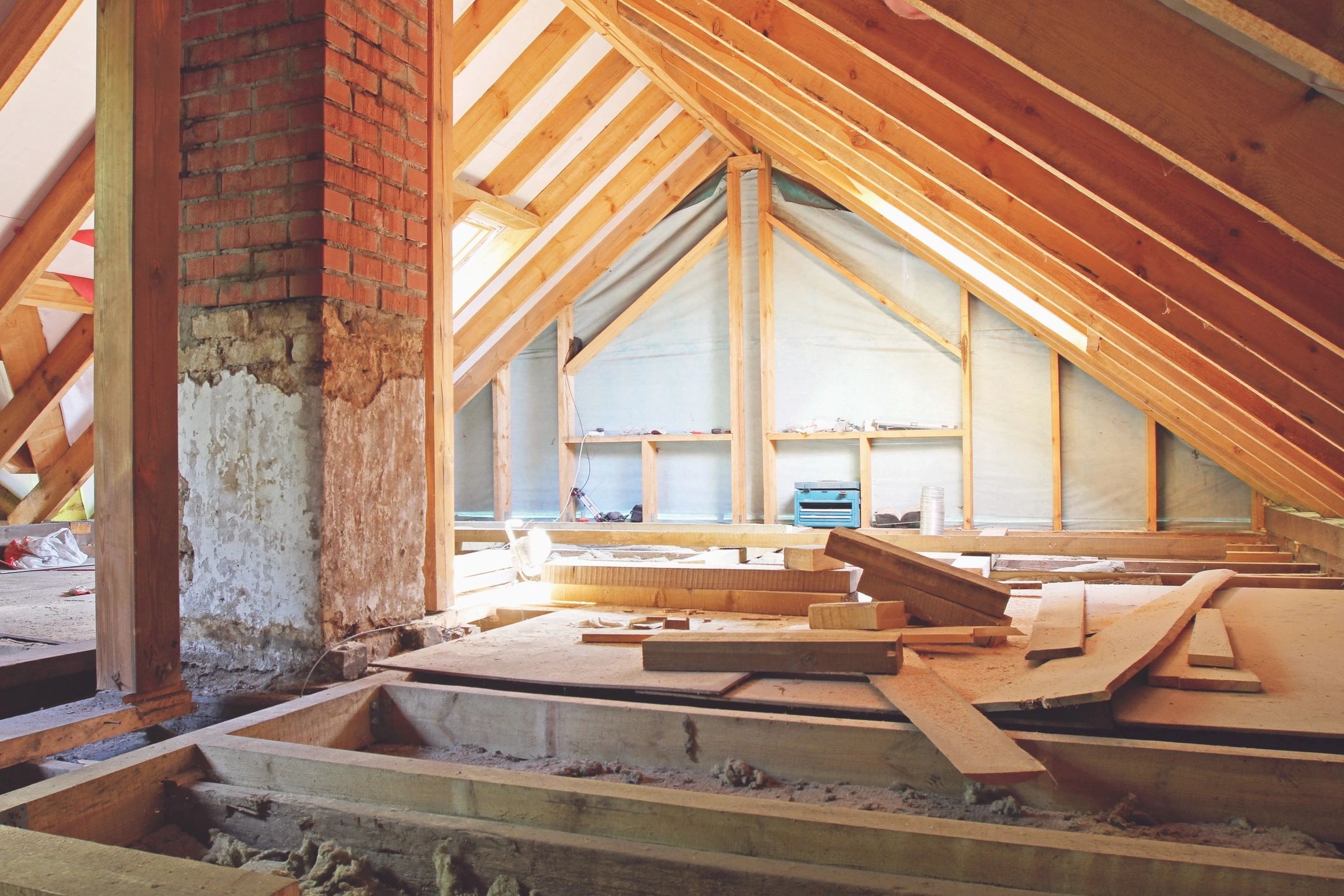
Keeping your home comfortable during a Northern Michigan winter takes more than turning up the thermostat. If insulation is missing or inadequate, heat can escape through the attic, walls, and foundation, leaving some rooms colder than others. In Buckley, Gaylord, Cadillac, and Traverse City, long winters make those gaps especially noticeable. Insulation also helps slow heat entering your home during warmer months.
The areas that need the most attention depend on your home’s construction, but these are the main places to consider.
Attics
Attics separate the rooms below from a space that can become very cold in winter and hot in summer. Without enough insulation, heat moves more easily between those spaces.
In a typical vented attic, insulation belongs along the attic floor, including the access hatch. Gaps and thin coverage leave parts of that boundary less protected. Proper attic insulation works alongside air sealing, which closes openings where heated indoor air can escape. Homes with finished attics may need a different approach.
Basements and Crawl Spaces
Basements and crawl spaces form the lower boundary of many homes. Even if you don’t spend much time there, their insulation can affect the rooms above.
Basement Walls and Rim Joists
Basements can lose heat through foundation walls, particularly where the foundation extends above ground. When a basement is heated or connected to the home’s conditioned space, insulating those walls helps protect the lower level from colder surroundings. Rim joists, the perimeter framing where the house meets the foundation, also deserve attention. Gaps here can admit outdoor air, so insulation and air sealing need to work together.
Moisture matters when planning basement insulation. Leaks and damp surfaces need attention before installation because insulation won’t stop water entering through the foundation.
Crawl Spaces
Cold conditions in a crawl space can contribute to heat loss through the floor above. Where insulation belongs depends on whether the crawl space is vented or sealed and conditioned.
In a vented crawl space, insulation generally goes beneath the floor above. In a conditioned crawl space, it typically belongs along the foundation walls instead.
A crawl space insulation plan also needs to account for ground moisture, drainage, and humidity. Exposed soil can release water vapor, making a ground vapor barrier an important part of moisture management.
Exterior Walls
Exterior walls separate much of your living space from outdoor temperatures. Missing insulation or gaps inside wall cavities allow heat to move through them more easily. Older homes and additions may have different insulation levels, so not every wall needs the same improvement. Walls beside an attached, unheated garage also deserve consideration.
Floors Over Unheated Spaces
Floors above garages, open areas, or unconditioned basements can lose heat to the colder space below. Insulation should stay against the subfloor and provide consistent coverage without gaps or sagging. If a basement or crawl space is already conditioned and insulated at its walls, the floor above generally isn’t the main insulation boundary.
Identify Your Home’s Priorities
Insulation contractors can assess your home’s construction and existing coverage to identify which areas need improvement first. Story Basements offers professional insulation services throughout Northern Michigan. Contact our team to discuss your home’s needs.